 English
 Nederlands
 Français
 Deutsch
 Español
 Italiano
Sights Stop 2 on our walk
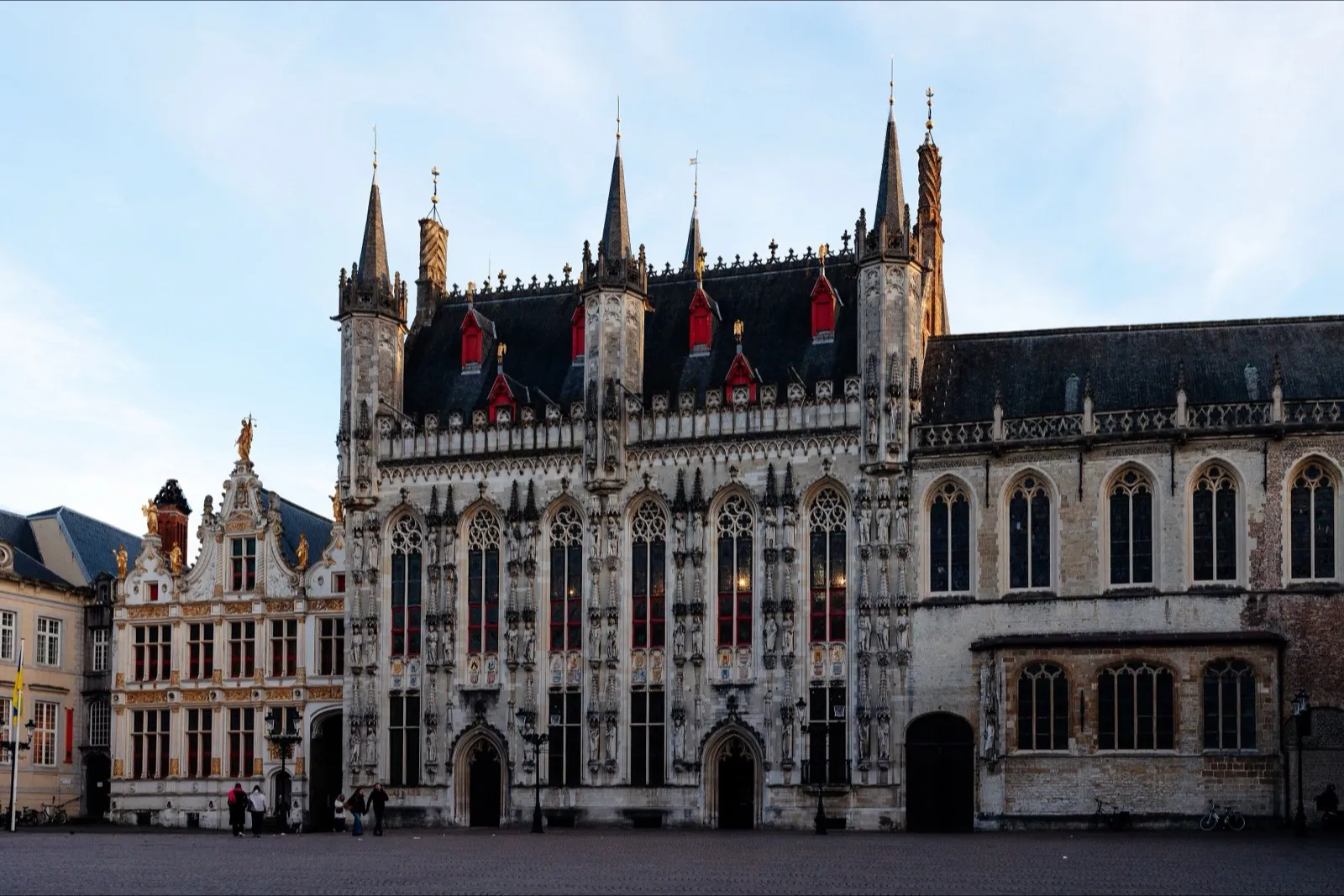
The Burg in Bruges: the Town Hall, the Basilica of the Holy Blood and the old seat of power
The Burg is the small square behind the Markt where Bruges was governed for centuries. Its two highlights are the Town Hall, one of the oldest in the Low Countries, with its painted Gothic Hall (€8), and the Basilica of the Holy Blood, two chapels on top of each other, free to enter. The relic of the Holy Blood is shown every day from 14:00 to 16:00.
Staying in Bruges? Our nine rooms are a short walk from here. See the rooms
What is the Burg?
For centuries the seat of both church and city stood around this square: the cathedral of St Donatian, the chapel of the Counts of Flanders, the Town Hall and the court of the Liberty of Bruges, the Brugse Vrije.
The cathedral has gone. The French Republic had it demolished in 1799; it was where Count Charles the Good was murdered in 1127 and where the painter Jan van Eyck was buried in 1441. Its foundations survive in the cellars of the hotel on the north side of the square.
The Town Hall
What it is
built from 1376 to 1421, it is one of the oldest city halls in the Low Countries, and the city council still meets in the building.
The façade
a row of statues of the counts and countesses of Flanders. The originals were destroyed in the French Revolution; the ones you see are later replacements.
The Gothic Hall
on the first floor, a hall with a wooden vault on 14th-century painted consoles and murals of the city's history painted around 1900 by Albrecht De Vriendt.
The Historical room
on the city and the sea, with an augmented-reality model.
The Liberty of Bruges
your ticket also opens the Renaissance hall of the Brugse Vrije next door, with its huge chimneypiece of oak, marble and alabaster, made in 1528 in honour of Emperor Charles V. That hall is open only at weekends; a ticket bought on a weekday can be used there within seven days.
Town Hall tickets and hours
Ticket
€8. Under 26 €7, under 18 €4, under 13 free. The Brugse Vrije is included.
Hours
every day from 9:30 to 17:00. 24 and 31 December until 16:00; closed on 25 December, 1 January and Ascension Day.
Council and weddings
the council meets on the last Monday of the month (not in July); part of the building is then closed and the ticket is cheaper. Weddings can close it on Tuesday mornings, Friday afternoons and Saturday mornings.
Access
the entrance is wheelchair accessible and there is a lift; the toilet is not adapted.
The Basilica of the Holy Blood
In the corner of the square stand two chapels, one on top of the other. The lower chapel of St Basil, built in the 12th century, is Romanesque. A stair leads up to the upper chapel, Gothic in origin but rebuilt and painted in the 19th century, where the relic is kept.
The relic is venerated as the blood of Christ. The story that Count Thierry of Alsace brought it from the Holy Land in 1150 is, in the basilica's own words, a stubborn legend: the oldest reliable records are from the 13th century, and the relic most likely came from Constantinople after 1204.
Entry: free. The basilica is open every day from 10:00 to 17:15.
The relic is shown: every day from 14:00 to 16:00, and every Friday from 10:15 to 11:00.
Museum and treasury: €5, under 12 free. It holds the reliquary of 1617 in which the relic is carried.
Mass: every day at 11:00 except Monday. During services one chapel is open to worshippers only.
The Holy Blood procession
Once a year, on Ascension Day, the relic is carried through the city in the Procession of the Holy Blood: about 1,800 people from Bruges in biblical and historical scenes, in five parts and 58 groups, with some 200 animals and 10 floats. All the music is live, from more than 250 musicians. UNESCO added the procession to its list of intangible heritage in 2009. The people of Bruges call the day "Holy Blood Day".
Next date: Thursday 6 May 2027, and in 2028 Thursday 25 May. The day runs like this. At about 10:30 the relic is placed in its shrine on the Burg while the Belfry's victory bell rings, and the Noble Brotherhood of the Holy Blood takes it in a short morning procession to St Salvator's Cathedral. At 11:00 the Bishop of Bruges leads a Mass there with bishops and abbots from the region as his guests; the relic can be venerated after it. At 14:30 the procession itself leaves the Dijver. It takes about an hour and a half to pass any one point. At 17:30 it ends with a blessing with the relic on the Burg, which everyone may attend.
The route runs from the Dijver along Mariastraat, Simon Stevinplein, Steenstraat and 't Zand, then back through Noordzandstraat and Geldmuntstraat to the Markt, Breidelstraat and the Burg, and on along the Rozenhoedkaai and Wollestraat. Watching is free from anywhere along it. The Burg and the Markt fill up first; a quieter spot on Steenstraat or the Rozenhoedkaai works as well, and the stands are the only way to be sure of a seat.
Seats: stands cost €10 or €15, benches €5.50. Groups of more than 20, over 65s, visitors with a disability and children under 16 pay €8.50 or €13 for a stand and €4 for a bench. Sales start on 28 February 2027, online, by phone (+32 78 15 20 20) or at the tourist offices on 't Zand, the Markt and the station square. The printed programme is sold at the same offices beforehand and along the route on the day. If the procession is called off for bad weather, tickets are moved to 2028 or refunded.
Getting around that day: buses stop running on the route from 12:45, and most streets on it are closed to cars and bikes from 13:00, some from 8:00. The city's free Erfgoedapp gives an audio description and clips in sign language during the procession, and the whole thing is broadcast live on television and online.
Since when: the procession is first mentioned in 1291, in the charter of the porters' guild, which obliged the guilds to take part; the organisers count its age from 1304. For centuries it went round the city walls; from 1578 it stayed inside them, and it was halted under the Calvinist city government from 1578 to 1584 and again under French occupation from 1796 to 1819. For a long time it was held on the first Monday after 1 May; it moved to Ascension Day in 1970. Today's costumes and scenes are set in the Bruges of the 15th century, the city's Golden Age.
How long do you need?
As a guide: about an hour for the Town Hall, and half an hour for the basilica, longer if you wait for the relic. Plan the basilica for the early afternoon if you want to see the relic.
Getting there from Hotel Karel de Stoute
The Burg is about 10 minutes on foot from our door on Moerstraat, just past the Markt. On our walk through historic Bruges it is the second stop, 8 minutes after the Belfry.
Frequently asked questions
Is the Basilica of the Holy Blood free?
Yes. Only its small museum and treasury cost €5, and under 12s enter it free.
When is the Holy Blood shown?
Every day from 14:00 to 16:00, and on Fridays also from 10:15 to 11:00.
When is the Holy Blood procession in 2027?
On Ascension Day, Thursday 6 May 2027, from 14:30. Watching is free; seats go on sale on 28 February 2027. In 2028 it is on Thursday 25 May.
How much is the Town Hall of Bruges?
€8, with reductions for under 26s and under 18s and free entry under 13. The ticket includes the Renaissance hall of the Brugse Vrije, which opens at weekends.
Is the Town Hall open every day?
Yes, from 9:30 to 17:00, except 25 December, 1 January and Ascension Day. Council meetings and weddings sometimes close part of it.
Where was St Donatian's Cathedral?
On the Burg, opposite the Town Hall. It was demolished in 1799; its foundations survive in the cellars of the hotel on the square.
How long does the Holy Blood procession take?
About an hour and a half to pass any one point. It starts on the Dijver at 14:30 and ends on the Burg at about 17:30.
Is the Holy Blood procession free to watch?
Yes, from anywhere along the route. Only the stands (€10 or €15) and benches (€5.50) need a ticket, on sale from 28 February 2027.
More guides to the sights
All guides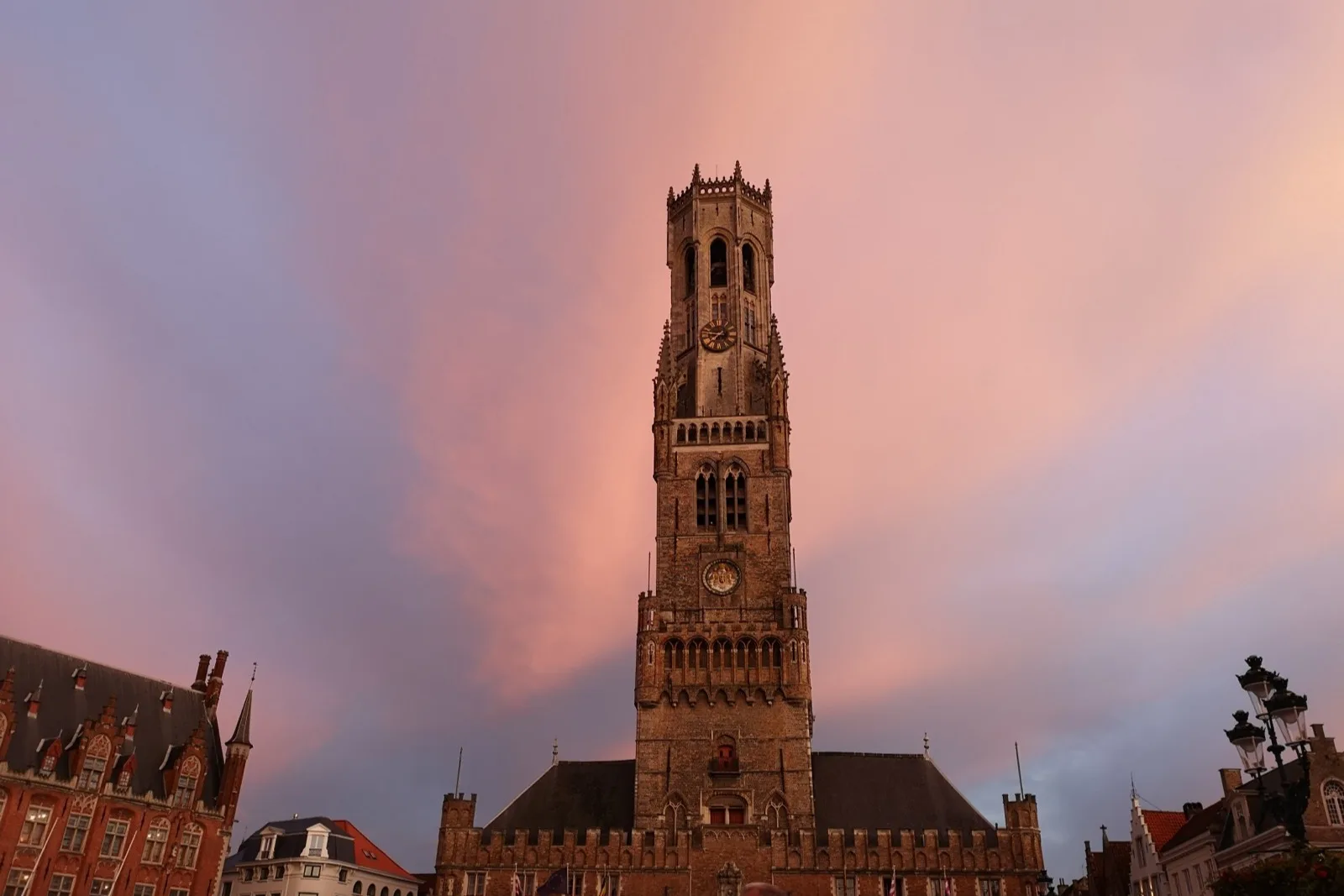
Sights
The Belfry and the Markt
366 steps, 47 bells and time slots: climbing the tower, and what to see on the square.
Read the guide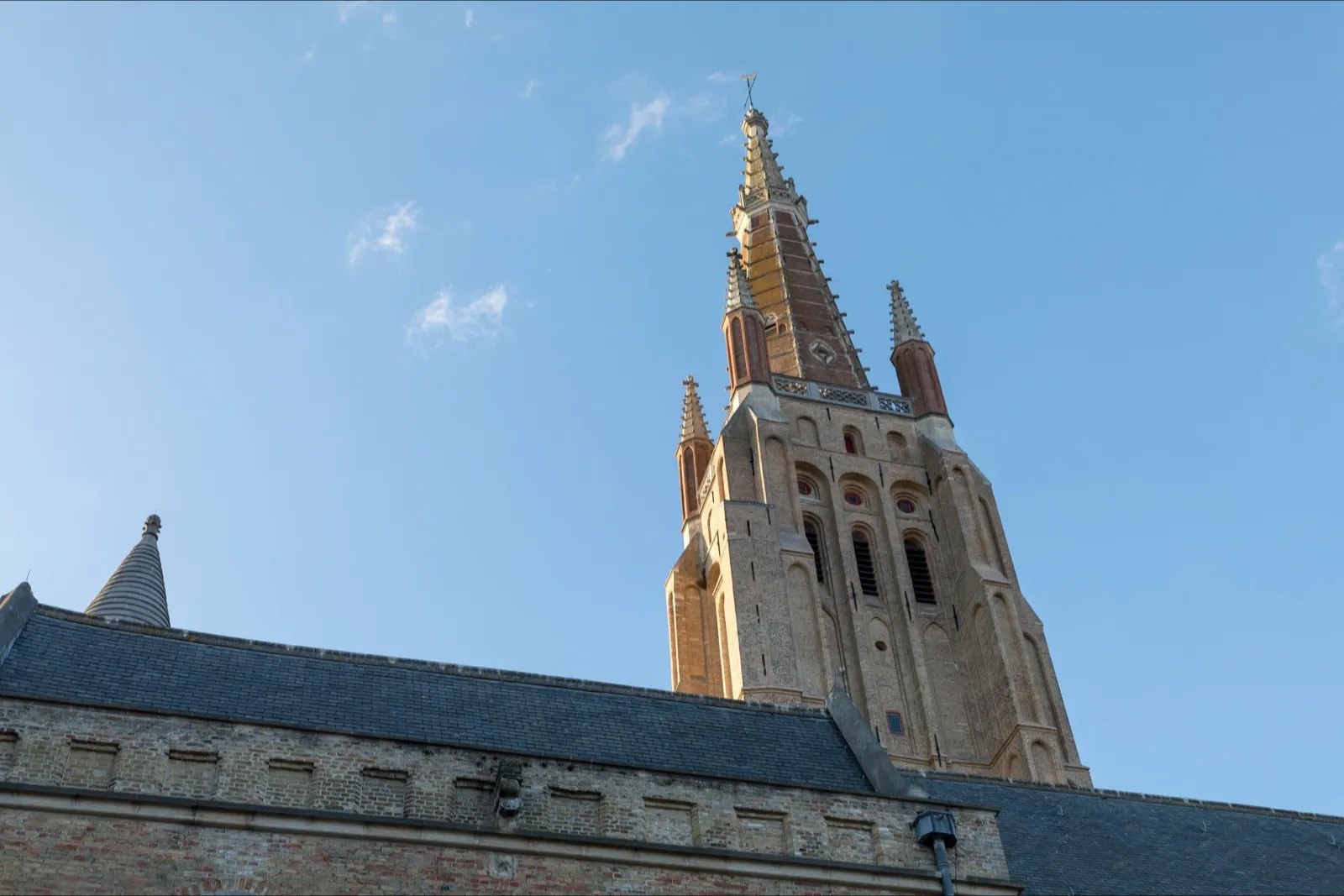
Sights
Church of Our Lady and Michelangelo
Michelangelo's Madonna and the tombs of Mary of Burgundy and Charles the Bold.
Read the guide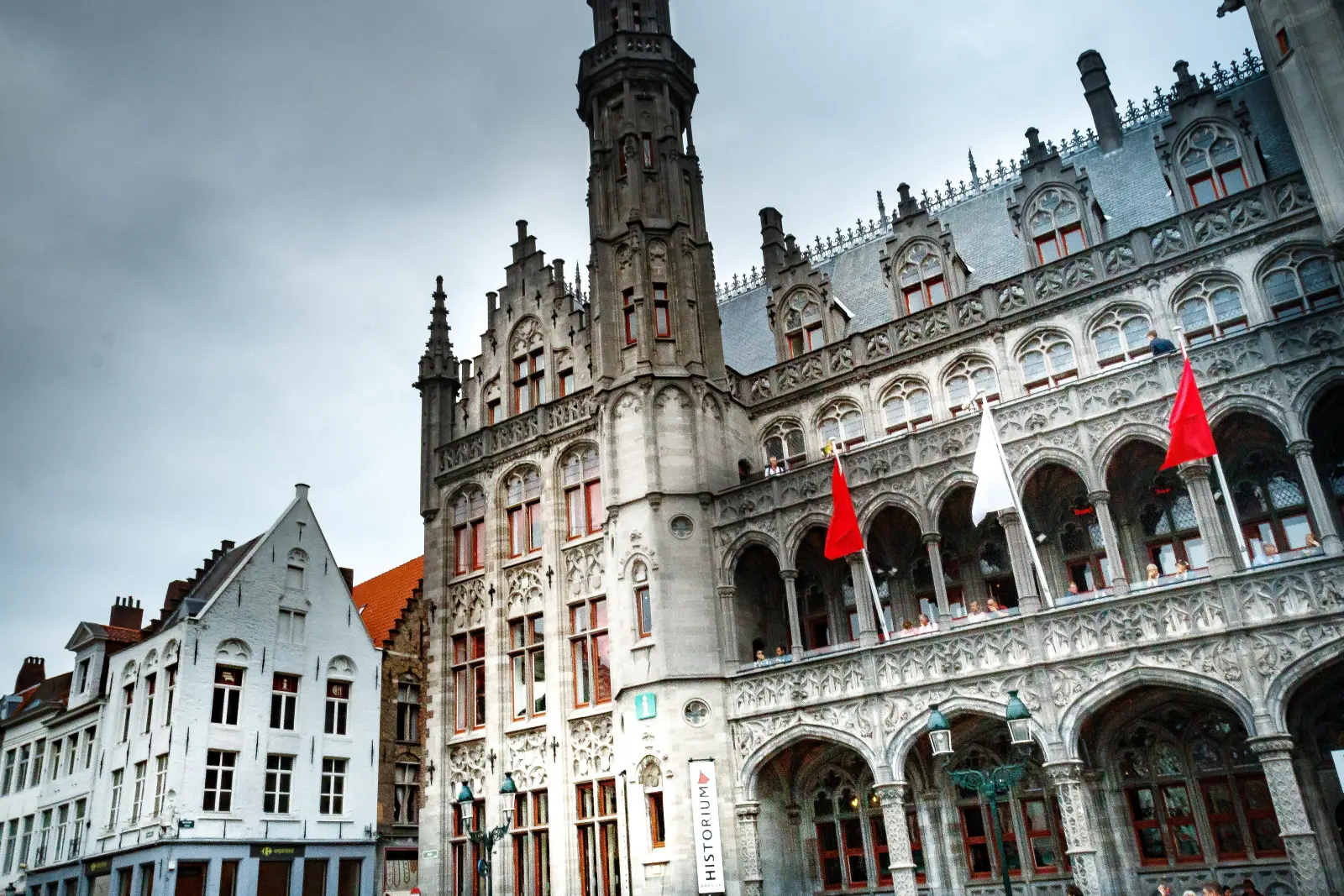
Sights
Historium Bruges: is it worth it, and how long does it take?
Film and sets tell a story set in 15th-century Bruges, on the Markt. Allow about an hour.
Read the guide
Stay in a house built for Charles the Bold
Moerstraat 23, five minutes from the Markt. Book here for €10 less than on Booking.com.
Check Availability