 English
 Nederlands
 Français
 Deutsch
 Español
 Italiano
Burgundian history
Bruges in its Golden Age: trade, the Bourse, the Zwin and the houses that remain
Bruges had its Golden Age as a trading city between about 1280 and 1480, with the 15th century under the Dukes of Burgundy as its peak. Ships reached it through the Zwin, an arm of the sea, by way of Damme and Sluis; Flemish cloth went out, the goods of Europe came in, merchants from Italy, Spain and the German Hanse kept houses here, and the Van der Beurze inn gave the word "bourse" to many languages. From 1480 came crisis, sand and a slow move to Antwerp. Much of what the merchants built still stands north of the Markt.
Staying in Bruges? Our nine rooms are a short walk from here. See the rooms
When was Bruges' Golden Age?
The city's Golden Age is usually dated from the 12th century to the 15th, with its greatest years as a market between 1280 and 1480. In the 13th century Bruges was the leading trade centre of northwest Europe; after Flanders passed to the Dukes of Burgundy in 1384, the 15th century brought wealth the city had not seen before, with the court in residence. The crisis announced itself from 1480 and the boom ended after Mary of Burgundy's sudden death in 1482.
How big was it? Around 40,000 to 45,000 people in the 13th century, one of the largest cities north of the Alps; estimates vary. By 1600 the number was about 30,000.
The Zwin: a storm, a sea arm and two outports
Bruges never lay on the sea. From about 1050 silting had cut its direct access to the water; a storm in 1134 opened a natural channel, the Zwin, that reached about 15 km inland, as far as Damme. Shortly after 1160 the city and Count Philip of Alsace dammed the Zwin, and the town that grew at the dam, Damme, became the outport: goods were moved from sea ships onto small boats and carried to Bruges along the Reie.
The Zwin began to silt from the late 13th century, and the harbour had to be extended beyond Damme to take the new, larger cog ships. Sluis, a toll post from around 1270, became Bruges' main outport in the 14th century and from 1387 the main harbour of the Burgundian fleet.
What was traded: wool, cloth and the goods of Europe
Bruges' own product was cloth. Flemish cloth had been the region's export since the 11th century, and the city's merchants reached out to the wool districts of England and Scotland for the raw material; Florentine agents bought English wool made into cloth in Bruges and sold it to the courts in Paris and Avignon. From 1314 the English Crown fixed where its wool could be sold, the Staple, which in the first half of the 14th century went in turns to Bruges and Antwerp. Later the wool came from Spain, unloaded at the Spaanse Loskaai.
From the east the Hanse brought beeswax, furs, timber, resin, flax, honey, wheat and rye; from Sweden came copper, iron and herring; cloth went back the other way. From the 14th century the Italian and other merchants also traded bills of exchange, paper that moved money between cities.
The merchant nations and their houses
The first Genoese merchant fleet appeared in the port of Bruges in 1277, and by the end of the 13th century the Italians had made Bruges the fixed base for their sea trade. During the 14th century the foreign nations settled around the Ter Beurze inn on Vlamingstraat: the Venetians opened the first consulate in 1322, Genoa opened its consulate in 1397 and built its loge in 1399, and the Florentines were on the Beursplein in the 1420s. The Castilians and Basques formed one nation until 1455, near the present Jan van Eyckplein.
The largest group were the Easterlings, the German merchants of the Hanse. In 1252 and 1253 Countess Margaret granted privileges to merchants from Lübeck, Hamburg, Cologne and other towns. Bruges was never a Hanse town, but it held the Hanse's most important trading post. From about 1458 the nation sat on what is now the Oosterlingenplein, where in 1478 the old, partly wooden house was replaced by a larger one at the city's cost.
The Italian bankers and the Medici in the Hof Bladelin
The Italians brought banking with their trade. The Medici bank of Florence had agents in Flanders from 1416 and opened a Bruges branch on 24 March 1439 under Bernardo Portinari. From the mid-1460s it sat in the Hof Bladelin on Naaldenstraat, the house Pieter Bladelin, a councillor of Philip the Good, had built around a courtyard before 1451; in 1466 its new owner, Piero de' Medici, added the hall still called the Medici hall.
Tommaso Portinari lent to the Burgundian court without authority from Florence, and Lorenzo de' Medici's own memorandum of bad debts lists 16,150 pounds groat owed by Charles the Bold, the duke for whom the house of Hotel Karel de Stoute was built. The branch was wound up in 1478 with heavy losses. Angelo Tani, a Medici agent here, ordered Memling's Last Judgment (1467 to 1471) for a chapel near Florence; the ship carrying it was taken by a Danzig privateer, and the triptych hangs today in Gdańsk.
The Van der Beurze inn and the word "bourse"
You will often read that the stock exchange was invented in Bruges. The Van der Beurze family ran an inn on Vlamingstraat from the middle of the 13th century, and Robrecht van der Beurze was running it by 1285. From the 14th century the square in front of it, the Beursplein, was where merchants and bankers met to trade bills of exchange: the commercial and financial centre of Bruges. The family's name, with its arms of three purses, became the word for an exchange in many languages: bourse, beurs, Börse, bolsa, borsa. The word referred first to the square, not to the inn.
How the trading worked is harder to say, because its customs were never written down. No shares changed hands here, and no building was put up for the purpose: the first purpose-built exchange opened in Antwerp in 1531.
The port inside the city: the crane, the Waterhalle and the Tolhuis
The boats from Damme came into the heart of the city along the Reie. The cloth hall under the Belfry, begun around 1240, had grown too small, so in 1284 the city built the Waterhalle on the east side of the Markt: a Gothic hall set across the Kraanrei, where boats loaded and unloaded under cover. In 1787 to 1791 it was pulled down against the wishes of the city council; the Provinciaal Hof stands on its site. Barrels of wine and beer, too heavy for the hall, were lifted by the city crane, which stood on the Kraanrei from 1290 to 1767.
At St John's bridge, on the square now called the Jan van Eyckplein, a toll was levied on goods coming in; Pieter van Luxemburg, a knight of the Golden Fleece, rebuilt the toll house in 1477 with the toll money. Across the square is the Poortersloge, the lodge of the city's merchant elite, built between 1395 and 1417; from its tower, Visit Bruges says, traders could see their ships approaching.
The end: sand, politics and Antwerp
The decline had more than one cause. Sand came first: the Zwin had been silting since the late 13th century, and around 1500 it became unusable. Politics came next. After Mary of Burgundy died in 1482, Flanders rose against her widower Maximilian; the court and the international traders left, and in 1488 the people of Bruges held Maximilian prisoner on the Markt, as our Charles the Bold guide tells.
Then the departures: the Fuggers to Antwerp in 1505; the Hanse office, which decided in 1520 to move and whose last Easterlings left in the 1550s; the Genoese in 1551. The wars of the Revolt, from 1568, ended what remained of the Zwin trade; the city's surrender in May 1584 was the economic death blow.
That is also why so much survives: a city that had stopped growing had also stopped rebuilding. In 1562 the city printed the bird's-eye plan Marcus Gerards had drawn for it, on ten brass plates, as an advertisement to bring trade back, with the sea drawn closer than it was; a first-edition copy hangs in the Gruuthuse Museum.
The Golden Age today: a walk in eleven stops (plus Damme and the Zwin)
The merchant quarter lies north of the Markt, around Vlamingstraat and the Jan van Eyckplein. Stops 1 to 10 are free from the street; stop 11 is two museums.
1. The Markt: the Provinciaal Hof on the east side stands on the site of the Waterhalle. The Belfry and the Burg have their own guides.
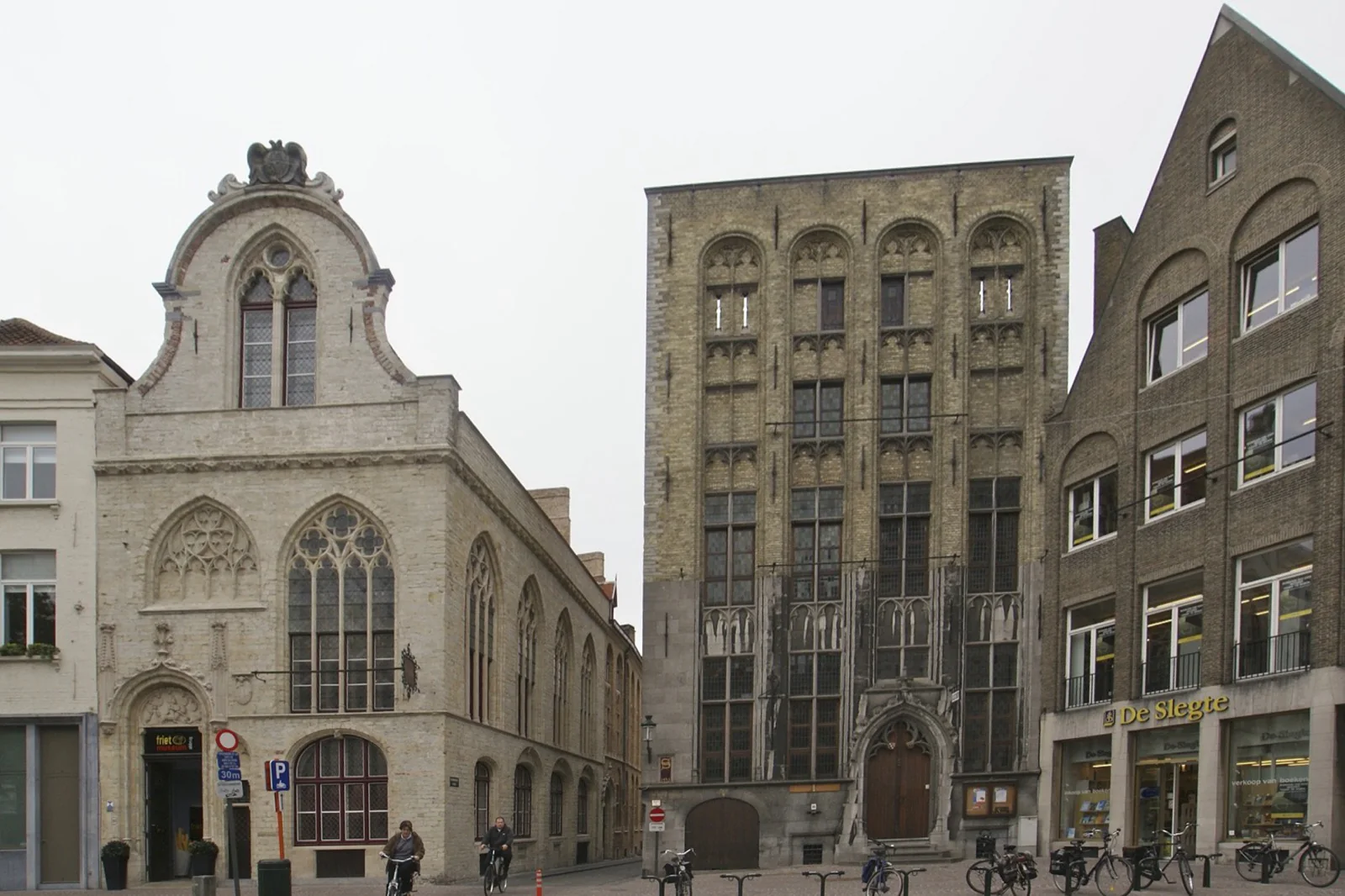
2. Vlamingstraat 35, Huis ter Beurze: the 1453 house on the site of the inn of 1285; the square in front, once the Beursplein, is now part of the street.
3. Vlamingstraat 33, the Genoese Loge: built in 1399, with St George and the dragon over the door; now a museum about Belgian fries.
4. Academiestraat 1, the Florentine Loge: the Florentine nation house from about 1420, with a plaque on the side wall quoting Dante on the Flemings and their dykes. Now a restaurant.
5. Jan van Eyckplein 1, the Tolhuis: the toll house of 1477, with Pieter van Luxemburg's painted arms over the porch.
6. Academiestraat 18, the Poortersloge: the merchants' lodge of 1395 to 1417, now a free art venue (entrance Kraanrei 19).
7. Kraanplein: where the crane stood from 1290 to 1767; the square dates from the vaulting of the Kraanrei in 1793 to 1795.
8. Spaanse Loskaai, Spanjaardstraat and Biskajersplein: the Spanish wool quay, with what is left of the Castilian nation house at Spaanse Loskaai 1 and of the Basque one at Biskajersplein 2 to 3.
9. Oosterlingenplein 4, the Oosterlingenhuis: the Hanse house of 1478, lowered in 1769 and without its spire since a fire in 1582. It is privately used and not open to visitors.
10. Naaldenstraat 17 to 21, the Hof Bladelin: the seat of the Medici bank, with the Medici medallions in the courtyard. The courtyard is not open daily; it can be seen on a guided visit or during exhibitions, so check with Visit Bruges first.
11. Two museums: the Gruuthuse Museum keeps a first-edition copy of the Gerards map of 1562 and columns from the Waterhalle; the Groeninge Museum, which closes in January 2027, has the portraits Pieter Pourbus painted in 1551 with the crane behind the sitters. Tickets and hours: our Bruges museums guide.
Further out lies Damme, the first outport, about 6 km northeast of Bruges along the Damse Vaart. Its town hall of 1464 to 1467 still stands, and Charles the Bold married Margaret of York there in 1468.
The Zwin survives at its mouth, as the Zwin Nature Park at Knokke-Heist, a nature reserve since 1952 (Wednesday to Sunday, 10:00 to 17:00). Across the border, Sluis, the second outport, has the only belfry in the Netherlands.
Getting there from Hotel Karel de Stoute
Our door at Moerstraat 23 is about 5 minutes on foot from the Markt, where the walk starts; Vlamingstraat and the Jan van Eyckplein are a few minutes north of the Markt. As a guide, allow an hour for the street stops, more for the museums.
Frequently asked questions
When was the Golden Age of Bruges?
Between about 1280 and 1480, with the 15th century under the Dukes of Burgundy as the peak. The crisis began in the 1480s, and the merchant nations left for Antwerp between 1505 and the 1550s.
Where does the word "bourse" come from?
From the Van der Beurze family, whose inn on Vlamingstraat in Bruges was running by 1285; merchants and bankers met on the square in front of it. No shares were traded there, and the first purpose-built exchange opened in Antwerp in 1531.
How big was medieval Bruges?
Around 40,000 to 45,000 people in the 13th century, one of the largest cities north of the Alps; estimates vary. By 1600 it had about 30,000.
Why did Bruges decline?
The Zwin, its channel to the sea, was unusable by around 1500, and after Mary of Burgundy's death in 1482 the court and the foreign merchants left. Trade, banking and the exchange moved to Antwerp.
Can you still see the Zwin?
Yes, at its mouth: the Zwin Nature Park at Knokke-Heist, a nature reserve since 1952. The inlet no longer reaches Bruges or Damme.
How do you get from Bruges to Damme?
About 6 km northeast of Bruges along the Damse Vaart: by bicycle along the canal path or by bus all year, by canal boat in summer.
More guides
All guides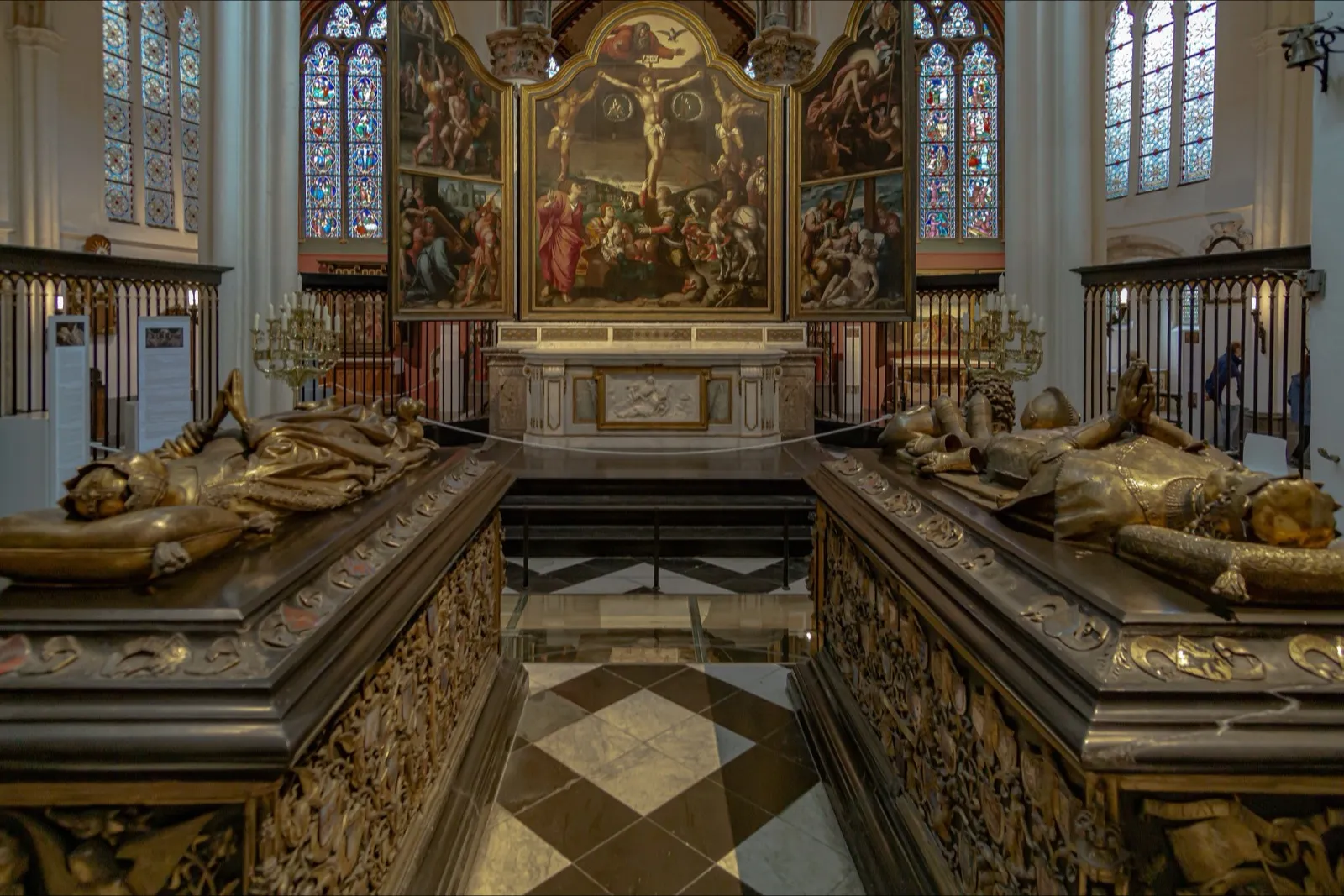
Burgundian history
Charles the Bold and Burgundian Bruges
The duke our house was built for, his wedding of 1468 and where to see his traces.
Read the guide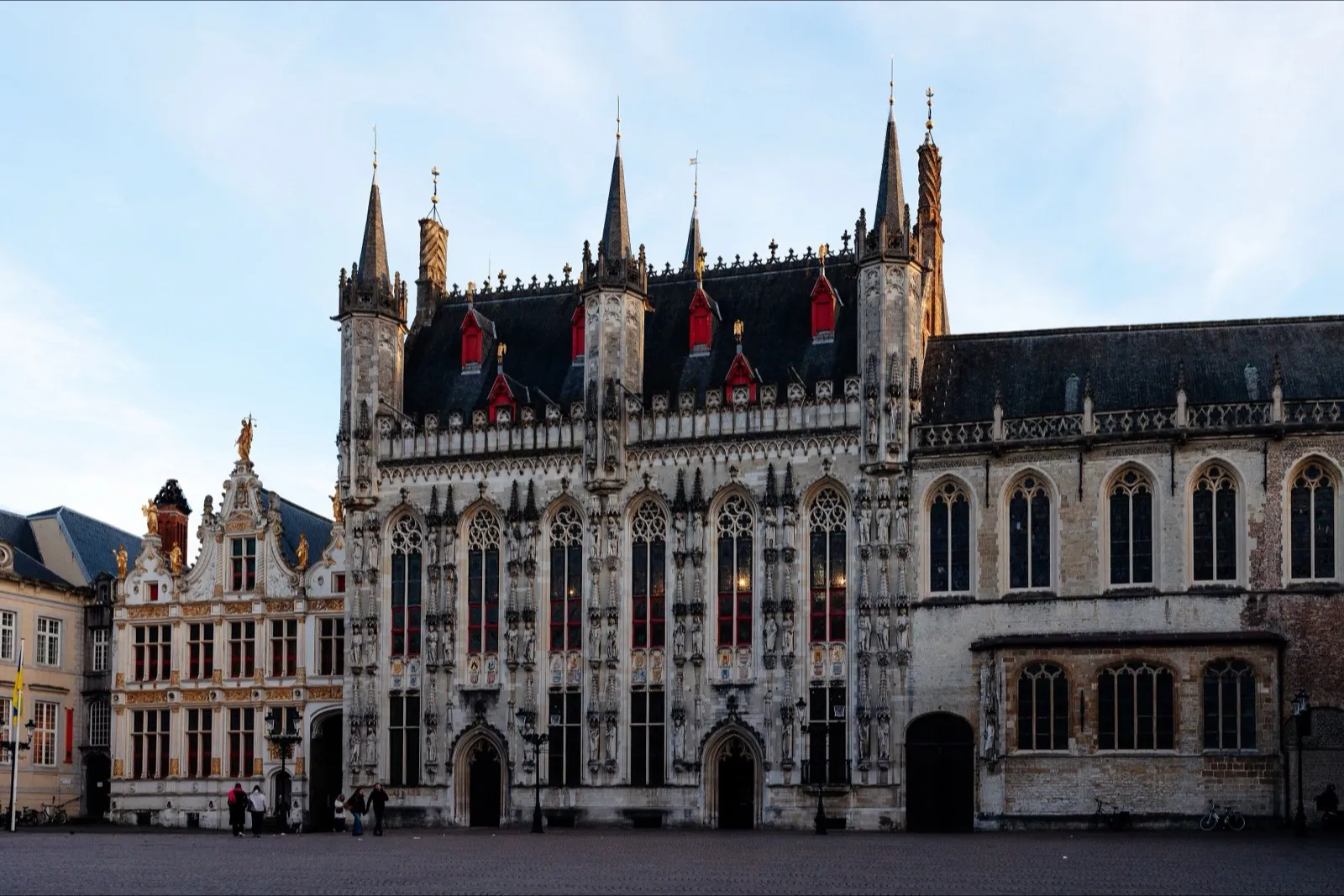
Sights
The Burg: Town Hall and Holy Blood
The Gothic Hall, the free basilica and when the relic is shown.
Read the guide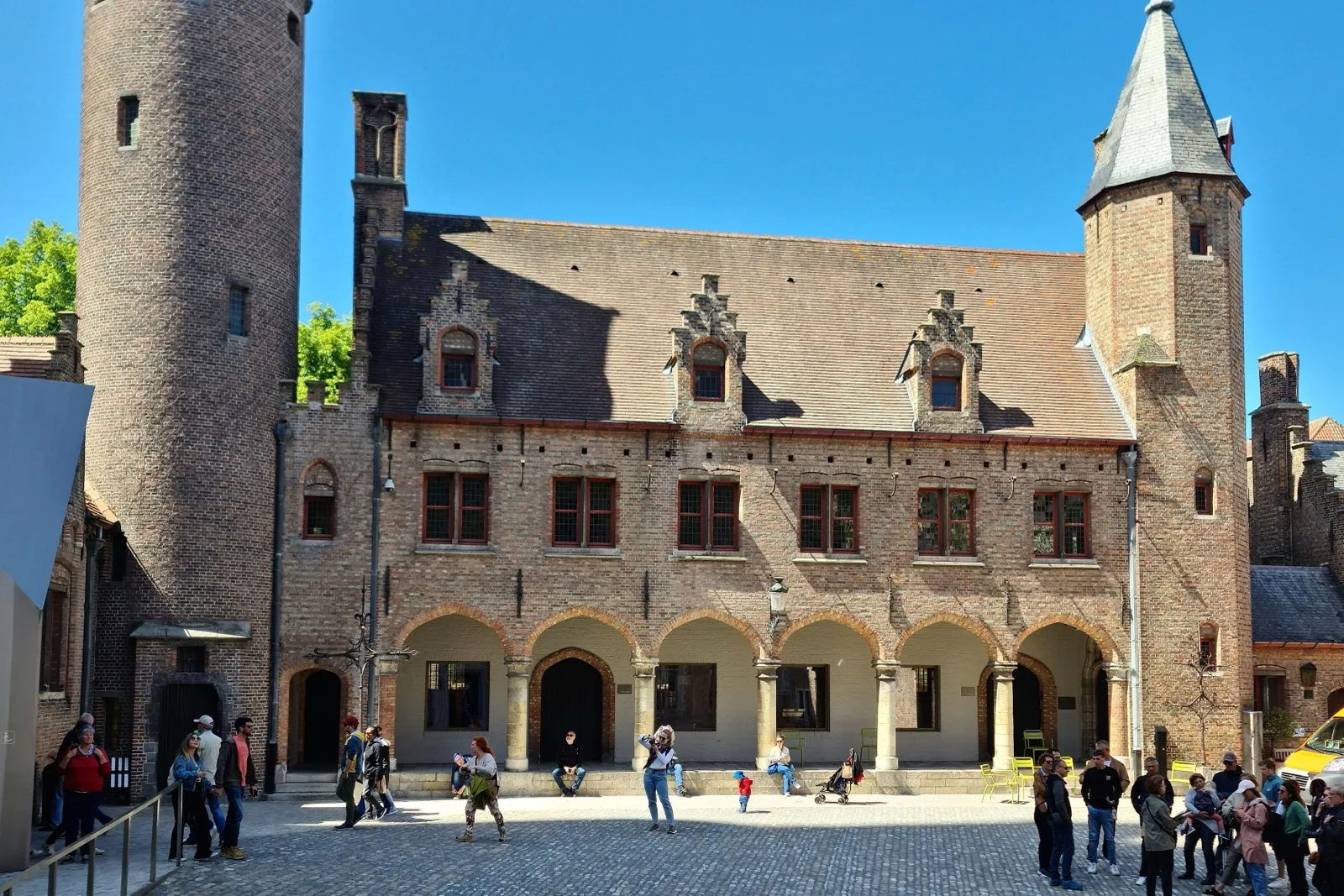
Museums
Gruuthuse Museum
The palace of Louis of Gruuthuse: 500 years of Bruges in tapestries, lace and stained glass.
Read the guide
Stay in a house built for Charles the Bold
Moerstraat 23, five minutes from the Markt. Book here for €10 less than on Booking.com.
Check Availability