 English
 Nederlands
 Français
 Deutsch
 Español
 Italiano
Sights
The churches and towers of Bruges: which tower is which, and what to see inside
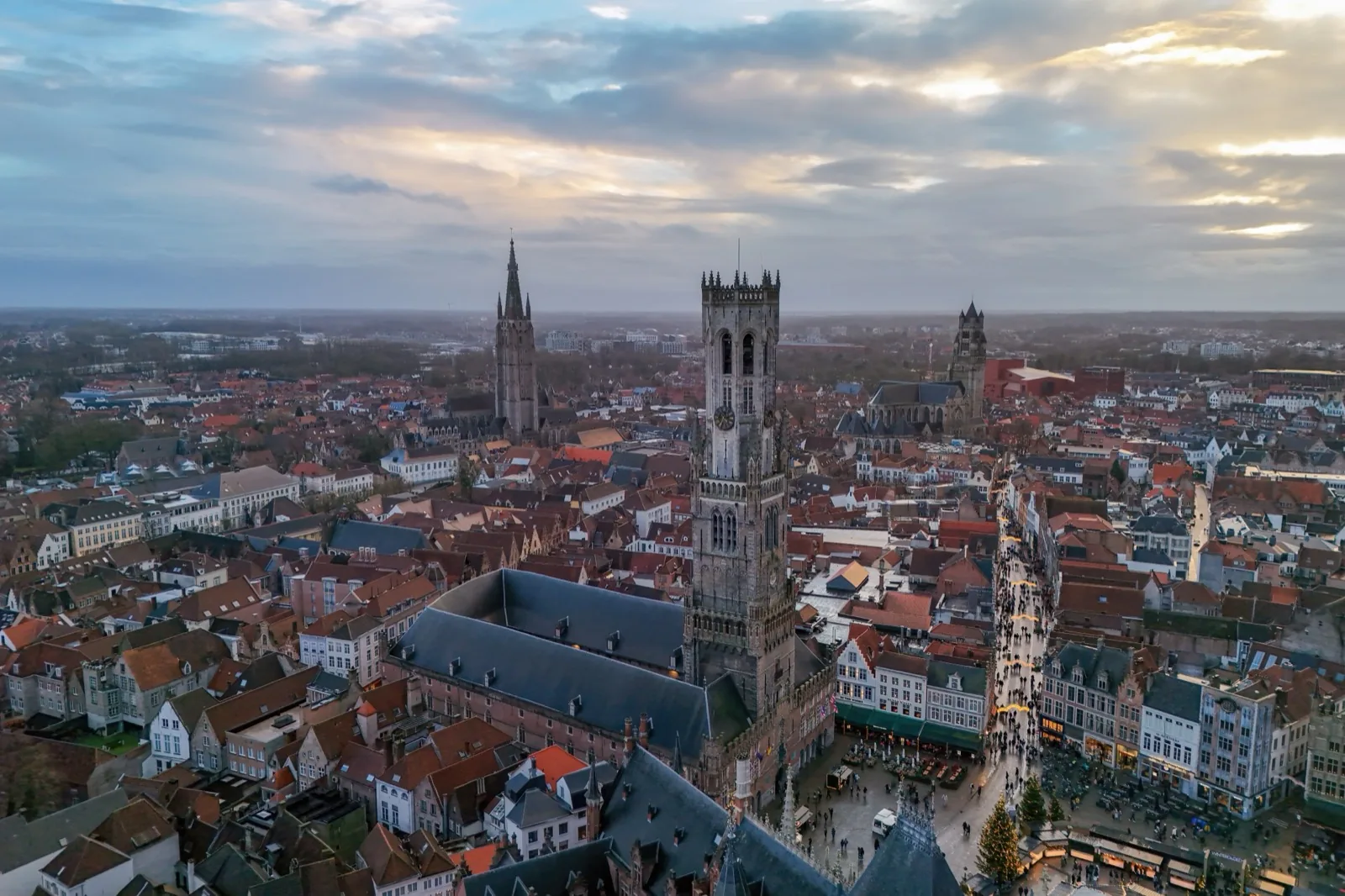
Three towers set the skyline of Bruges: the Church of Our Lady, about 115 metres, the Belfry, 83 metres, and St Salvator's Cathedral, almost 80 metres. The Belfry is not a church. Behind them stand the smaller parish churches and chapels, most of them free to enter: St James's, St Giles', St Anne's, St Walburga's and the Jerusalem Chapel, each with a story and a tower, or no tower, of its own. This guide tells the towers apart, says what to see inside each church, and gives the opening hours and prices.
Staying in Bruges? Our nine rooms are a short walk from here. See the rooms
Which tower is which
Seen from any open square, the towers of Bruges sort themselves by height and by shape:
The Church of Our Lady: the tallest, about 115 metres, a brick tower and one of the tallest brick towers in the world.
The Belfry: 83 metres, the square tower with the octagonal top on the Markt. It is not a church. It was 102 metres until its wooden spire burned in 1741 and was never replaced, and it leans about a metre.
St Salvator's Cathedral: almost 80 metres, according to the cathedral: the broad brick tower with the heavy, castle-like crown of the 19th century.
St James's: a heavy crossing tower of the 14th century with a tent roof, a spire and a gilded weathervane, west of the Markt.
St Giles': another heavy crossing tower, built from 1463 to 1472, with a spire placed between 1512 and 1556. It is the only church in the city centre with a tower clock.
St Anne's: a tall square west tower, finished in 1624, under a spire of 1761.
The Jerusalem Chapel: an Eastern-style tower crowned by a copper orb with a Maltese cross, a half Catherine wheel and a palm branch.
The English Convent: not a tower but a tall dome on a drum, built from 1736 to 1739.
Two churches have no tower by design. St Walburga's, the Jesuit church, never got the one its architect planned: money ran out, and the Jesuits of Bruges and Antwerp were rivals. The Basilica of the Holy Blood was to get a tower in the 19th century, and the city pressed for it, but it was never built. And one tower is gone: St Donatian's, the old cathedral on the Burg with its central tower, sold in 1799 and pulled down over the following years.
The skyline is younger than it looks. The Belfry's spire went in 1741. St Salvator's crown dates from 1843 to 1846 and its spire from 1865 to 1872. St Walburga's was built from 1619 to 1641, St Anne's tower was finished in 1624 and its spire in 1761, and the dome of the English Convent is from 1736 to 1739. The best place to see the towers together is the top of the Belfry: from there St Salvator's is to the west and the crossing tower of St James's to the north-west.
The three big ones
The Belfry is the tower of the market halls where cloth was sold. It held the city's treasury and archives, served as a lookout for fires, and has been on the UNESCO World Heritage list since 1999. It is the tower to climb for the view: 366 steps, in time slots. Our Belfry guide has the tickets and hours.
The Church of Our Lady is the tallest of the three, about 115 metres, one of the tallest brick towers in the world. Inside are Michelangelo's marble Madonna and Child and the gilt-bronze tombs of Mary of Burgundy and her father Charles the Bold. The church is free; the museum part with the Madonna and the tombs costs €10. Our Church of Our Lady guide has more.
St Salvator's Cathedral is called the oldest parish church in Bruges: first mentioned in 988, a parish church since 1086, and the cathedral only since 1834, when the bishopric was restored after St Donatian's was lost. Its tower is almost 80 metres, according to the cathedral, a 12th-century base under a crown of 1843 to 1846 and a spire of 1865 to 1872. Inside are eight 18th-century tapestries, the arms of the Knights of the Golden Fleece from the chapter of 1478 above the choir stalls, and a treasury. Entry is free. Our St Salvator's guide has the hours.
St James's, the parish church of the dukes
St James's (Sint-Jakobskerk) stands on Sint-Jakobsplein, at the corner of Moerstraat, west of the Markt: a brick hall church with a heavy crossing tower. The parish was founded around 1240, split off from St Salvator's, and a chapel was raised to parish church. The church of the 13th century was a brick cross church; the tower was built in the 14th century.
Between 1457 and 1512 it was enlarged to the south and west thanks, in the words of the heritage register, to the prosperity and generous gifts of the dukes of Burgundy. The main choir was built from 1468 to 1472, and the oak vault of the choir from 1516 to 1518. Philip the Good and Charles the Bold, who lived at the Prinsenhof close by when they were in Bruges, were parishioners here, and so were Ferry de Gros, Pieter Bladelin, the bankers Arnolfini and Tommaso Portinari, and the mayor Willem Moreel. The chapel of Ferry de Gros, treasurer of the Order of the Golden Fleece, dates from about 1525 to 1530. Our hotel stands within the grounds of the Prinsenhof, and St James's is the nearest church to its door: 150 metres along Moerstraat.
In 1580 the iconoclasts plundered the interior, so much of what you see inside is Baroque: a rood screen by J. Cocx (1628 to 1629), a pulpit of 1685 to 1689, a refit of 1691 to 1692 and a Hooghuys organ of 1869. The paintings are the reason to go in. The Legend of St Lucy, by the painter known only as the Master of the Legend of St Lucy, dates from about 1480; Lanceloot Blondeel's Legend of Cosmas and Damian from 1533; Pieter Pourbus's Risen Christ with the family of Zeger van Male from 1578; Van Oost's Presentation in the Temple from 1655. In the north transept are wall paintings of the 14th century, restored from 2002 to 2003. Hans Memling's Moreel triptych once hung here; it is now in the Groeninge Museum. By the door a bronze scallop shell marks the Via Brugensis, the pilgrim route through the city: some 40 shells lead from the Damme Gate to the railway station.
Entry is free. From April to December the church is open every day from 13:00 to 17:00; from January to March on Friday to Monday, 13:00 to 17:00. It is closed on New Year's Day.
St Giles', where Memling was buried
St Giles' (Sint-Gilliskerk) is on Baliestraat, in the north of the old city. A first church was built around 1241 on land given by Philippe Ram; St Giles is named as a separate parish in 1258 and had its own churchyard from 1311. The church of the second half of the 13th century was a cross church of basilica shape, and the crossing tower was begun then. Between 1461 and 1479 it was enlarged: the aisles from 1461 to 1465, the crossing tower from 1463 to 1472 and the side choirs from 1471 to 1475, which gave the church its present shape, close to a hall church. The spire went up between 1512 and 1556, and the octagonal corner turrets were taken down from 1749 to 1751. A restoration from 1873 to 1905 by A. Van Assche took the church back to a supposed medieval state, Baroque out and neo-Gothic in, so the outside is robust brick Gothic and the inside 19th-century neo-Gothic. It is the only church in the city centre with a tower clock.
Hans Memling was buried here on 14 August 1494; a plaque to the left of the entrance records it. The grave itself is lost, probably in the iconoclasm. Lanceloot Blondeel, Pieter Pourbus, Jan Provoost and the Claeissens family of painters were buried in or around the church too, and none of their graves survives.
Inside, look for Pourbus's polyptych of Hemelsdale (1546), Van Oost's St Francis receiving the stigmata (about 1650) and Jan Garemijn's series on the Trinitarian order, with The Arrival of Jan De Mulder in Dunkirk (1783), a Bruges man ransomed from slavery in Barbary. Entry is free, there is a free toilet, and the hours are the same as St James's.
St Anne's, a plain church with a Baroque interior
St Anne's (Sint-Annakerk) stands on Sint-Annaplein, east of the centre. In 1496 the mansion Hof ter Vere was bought and turned into a chapel, consecrated in 1497. In 1580, in the Calvinist years, it was sold and partly demolished. A completely new church was built on the old foundations from 1611 and consecrated in 1621; the tower was finished in 1624 and the present spire placed in 1761. It is a brick church of a single nave on a rectangular plan, Gothic in form and kept simple because materials were short, and, as Visit Bruges puts it, it surprises with the opulence of its Baroque interior. It has been called the salon church of Bruges.
That interior is the reason to visit: a marble rood screen by the Antwerp sculptor Hans van Mildert (1626 to 1628), a high altar of 1664, a pulpit of 1670, confessionals and panelling of 1676 to 1677, an organ case of 1707 and canvases by Jan Garemijn. The poet Guido Gezelle was baptised here on 1 May 1830; a stone placed in 1939 marks it. Entry is free; the hours are the same as St James's.
St Walburga's, the Jesuit church without a tower
St Walburga's (Sint-Walburgakerk) on Sint-Maartensplein was built for the Jesuits from 1619 to 1641, to the design of the Bruges Jesuit architect Pieter Huyssens (1577 to 1637) and finished by his fellow Jesuit J. Boulé. It was consecrated in 1642 and dedicated to St Francis Xavier; the west gable carries the date 1643. The tower in Huyssens' plans was never built, for lack of money and because the Jesuits of Bruges and Antwerp were rivals, so from the square you see a façade, not a spire. When the Jesuit order was dissolved in 1773 the church closed; in 1777 it was given to the parish of St Walburga and in 1779 inaugurated as its parish church, with the relics of St Walburga. The French seized it in 1796 as a Temple of the Law; it returned to worship in 1802.
Visit Bruges calls it the most richly decorated church in pure Baroque style in Bruges. The marble high altar by J. Cocx was consecrated in 1643; the oak pulpit by Artus Quellinus the Younger dates from 1670; the white marble communion rail by H. Verbruggen, of 1695, runs the full width of the church, 24 metres. There are paintings by Suvée, Garemijn and Odevaere, among them Suvée's altarpiece of 1783. The church has been used for concerts since the 1960s, there have been no weekly services since 2012, and the parish merged into St Giles' in 2014.
Entry is free and the hours are those of St James's, but the church is closed for interior restoration from 1 August 2026 to 31 March 2027, according to Visit Bruges; the dates may shift with the works.
The Jerusalem Chapel, a private church built after a pilgrimage
The Jerusalem Chapel (Jeruzalemkerk) on Peperstraat belongs to the Adornes estate: the house, chapel and almshouses of a family of Genoese origin, settled in Bruges since the 13th century. A chapel here was consecrated in 1429. Shortly after 1470 Anselm Adornes had the present chapel built, after his pilgrimage to the Holy Land that year, as the family's burial chapel and as a reminder of the Church of the Holy Sepulchre in Jerusalem. The tower is unlike any other in the city: Eastern in style, crowned by a copper orb with a Maltese cross, a half Catherine wheel and a palm branch, and the Cross of Jerusalem still stands on it.
Inside are the tomb monument of the Adornes and van der Banck families, attributed to the stonemason Cornelius Tieleman (1483), in Tournai stone and restored in 2022; stained glass of about 1560 showing members of the family, called the oldest stained glass in Bruges; a Calvary altar of about 1485; and a crypt with rib vaults. It is one of the few private churches in Belgium: the de Limburg Stirum family, descendants of Anselm Adornes, still use it for religious events. Anselm's will of 10 February 1470 also provided for twelve almshouses beside the chapel.
A ticket for the whole estate costs €11 (€9 for over 65s and groups, €7 from 7 to 25 and for visitors with a disability, free under 6 and with the museumPASSmusées), sold only at the reception desk. From 1 October to 31 March it is open Monday to Saturday from 10:00 to 17:00; from 1 April to 30 September Monday to Friday from 10:00 to 17:00 and Saturday from 10:00 to 18:00. It is closed on Sundays and public holidays. No photography is allowed inside the buildings; most of the estate is accessible to wheelchair users.
The Burg: the Basilica of the Holy Blood and the cathedral that is gone
The Basilica of the Holy Blood, in the corner of the Burg, is two chapels one above the other. The lower chapel was built around 1134 to 1157 by Count Thierry of Alsace and is Romanesque; the stair up, called De Steegheere, dates from 1528 to 1532. The building was damaged during the Revolution in 1792 and restored from 1820 to 1839, and it became a basilica in 1923. It is open every day from 10:00 to 17:15 and free; the relic is shown from 14:00 to 16:00 and on Fridays from 10:15 to 11:00, and the museum costs €5. Our Burg guide tells the story of the relic and the procession.
Across the square stood St Donatian's, the cathedral of Bruges from 1559 and the largest church in the city. The first church here was built at the earliest in 950 under Count Arnulf I, on a central plan modelled on the Palatine Chapel in Aachen; after a fire in 1184 a Romanesque church with a central tower replaced it, and a Gothic nave followed in the 14th century. It was where Count Charles the Good was murdered in 1127 and where Jan van Eyck was buried in 1441. Sold at auction on 28 April 1799, it was pulled down over the following years and never rebuilt; the relics of St Donatian went to St Salvator's in 1834. Excavations in 1955 and 1956 and from 1987 to 1989 found its foundations, and the hotel built on the north side of the square from 1987 to 1989 keeps remains of the choir in its basement.
The Beguinage church and the English Convent
The Beguinage church (Begijnhofkerk), dedicated to St Elizabeth of Hungary, stands inside the beguinage of Ten Wijngaerde, founded around 1244 to 1245 by Margaret of Constantinople. The first church, of the mid-13th century, burned in 1584, when a fallen candle set it alight while fugitive weavers sheltered there; it was rebuilt from 1604 to 1609. Inside, among 18th-century Baroque furnishings, is Our Lady of Spermalie, called the oldest wooden statue in Bruges, from the 13th century. Entry is free. The beguinage asks visitors to keep its silence.
The English Convent (Engels Klooster) on Carmersstraat was founded on 20 September 1629 to take in English sisters, Augustinian canonesses. Its church, built from 1736 to 1739 to a classical design by the Bruges architect Pulinx senior, is the one with the tall dome. Inside the dome St Augustine is taken up into glory; the high altar came from Italy and is made of twenty-three kinds of marble, and there is a 17th-century marble Madonna by Jan Delcour. The convent keeps a portrait of Thomas More after Holbein and some of his bones as relics: its founder was a distant relative of his. There are no open-door hours. A visit or guided tour of the convent or its church is by appointment, and Visit Bruges sells guided tours, also by appointment.
Opening hours and prices
St James's, St Giles', St Anne's and St Walburga's
free. From April to December every day from 13:00 to 17:00; from January to March Friday to Monday, 13:00 to 17:00. St James's is closed on New Year's Day. St Walburga's is closed for interior restoration until 31 March 2027; the dates may shift.
The Jerusalem Chapel (Adornes estate)
€11. From 1 October to 31 March Monday to Saturday 10:00 to 17:00; from 1 April to 30 September Monday to Friday 10:00 to 17:00 and Saturday 10:00 to 18:00. Closed on Sundays and public holidays.
The Basilica of the Holy Blood
free, every day from 10:00 to 17:15. The relic is shown from 14:00 to 16:00 and on Fridays from 10:15 to 11:00; the museum costs €5.
St Salvator's Cathedral
free. The hours, and the treasury's, are in our St Salvator's guide.
The Church of Our Lady
the church is free, the museum part €10. Monday to Saturday 9:30 to 17:00, Sunday 13:30 to 17:00.
The Belfry
tickets and time slots in our Belfry guide.
The Beguinage church
free.
The English Convent
by appointment only.
Getting there from Hotel Karel de Stoute
St James's is the church at the end of our street: 150 metres from the door at Moerstraat 23, about 2 minutes. The Markt and the Belfry are about 5 minutes on foot, and the Burg, St Salvator's and the Church of Our Lady each about 10 minutes. The churches on the east side of the city are further: St Walburga's about 12 minutes, St Giles' 13, St Anne's 17, the Jerusalem Chapel 18 and the English Convent 21, so they are best taken together as one loop.
Frequently asked questions
Which is the tallest tower in Bruges?
The tower of the Church of Our Lady, at about 115 metres, one of the tallest brick towers in the world. The Belfry is 83 metres and St Salvator's almost 80.
Is the Belfry a church?
No. It is the tower of the old market halls, where the city kept its treasury and archives and watched for fires. It is the tower you climb for the view, 366 steps.
Are the churches of Bruges free to visit?
Most are. St James's, St Giles', St Anne's, St Walburga's, St Salvator's Cathedral, the Basilica of the Holy Blood and the Church of Our Lady are free, though the museum part of Our Lady costs €10 and the basilica's museum €5. The Jerusalem Chapel is part of the Adornes estate, with an €11 ticket.
When are the smaller churches open?
St James's, St Giles', St Anne's and St Walburga's open from 13:00 to 17:00: every day from April to December, and Friday to Monday from January to March.
Where is Hans Memling buried?
He was buried in St Giles' church on 14 August 1494, as a plaque by the entrance records. The grave itself is lost.
Is St Walburga's open?
Not at the moment. Visit Bruges lists it as closed for interior restoration from 1 August 2026 to 31 March 2027, and the dates may shift with the works. Otherwise it keeps the parish hours, 13:00 to 17:00.
More guides to the sights
All guides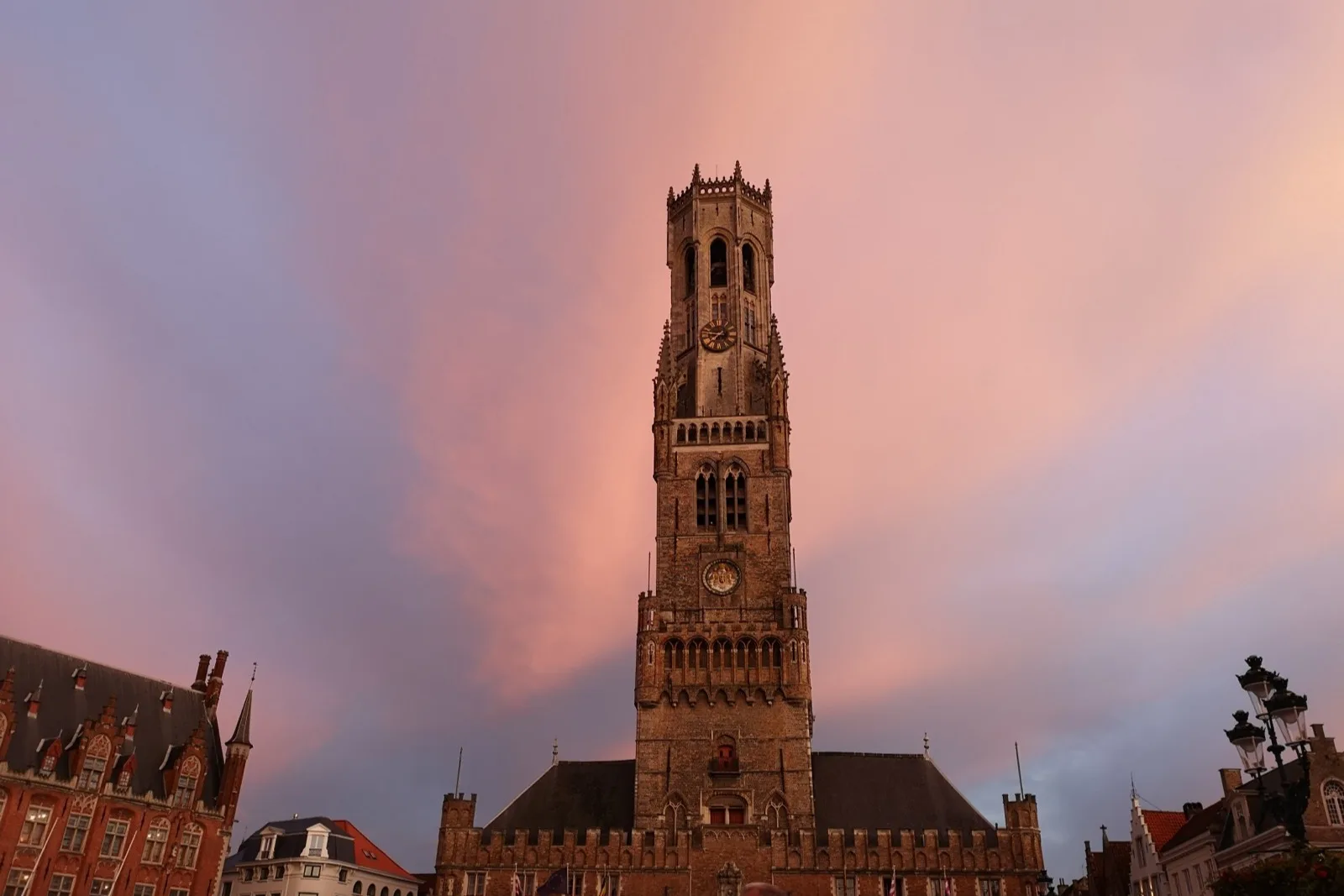
Sights
The Belfry and the Markt
366 steps, 47 bells and time slots: climbing the tower, and what to see on the square.
Read the guide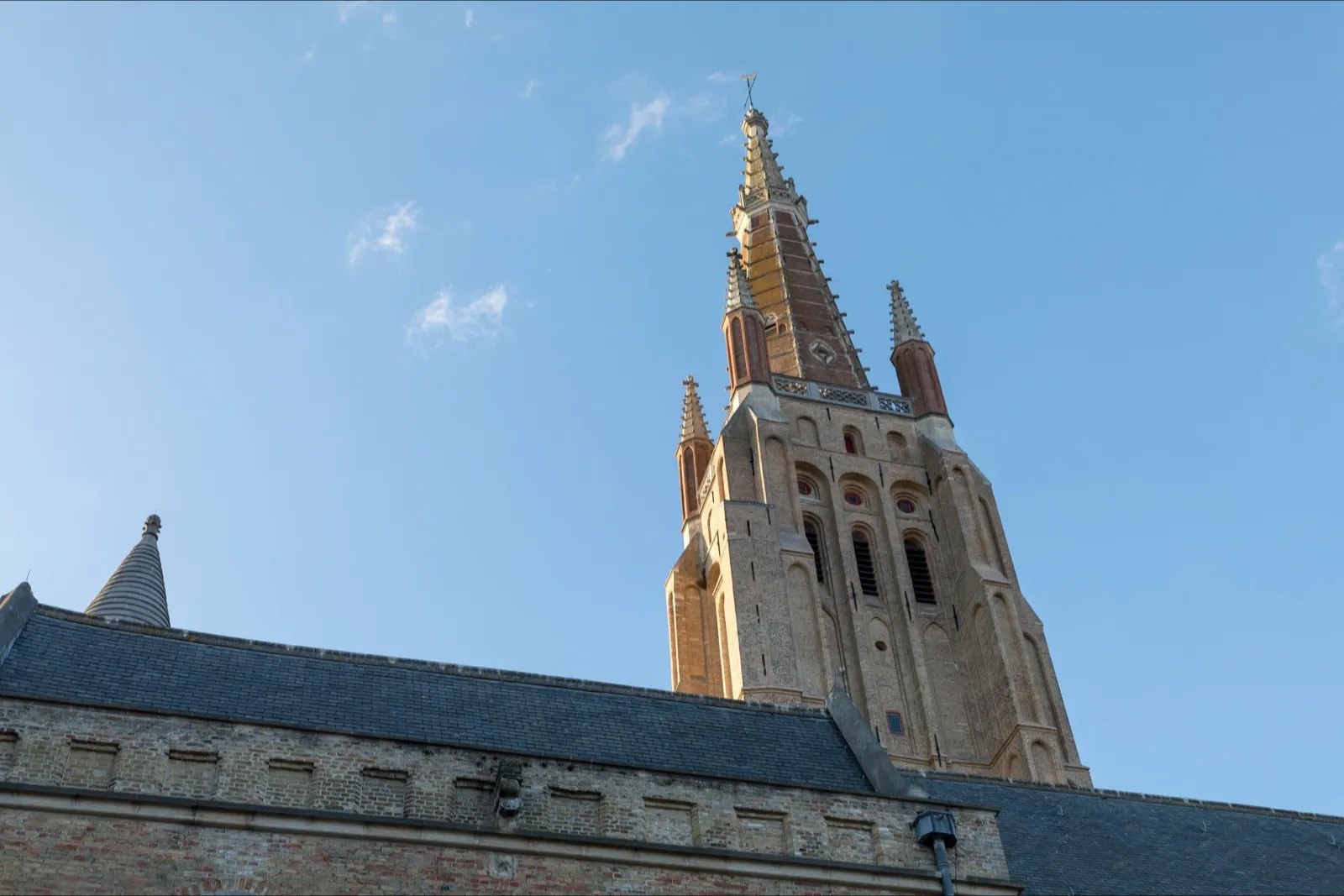
Sights
Church of Our Lady and Michelangelo
Michelangelo's Madonna and the tombs of Mary of Burgundy and Charles the Bold.
Read the guide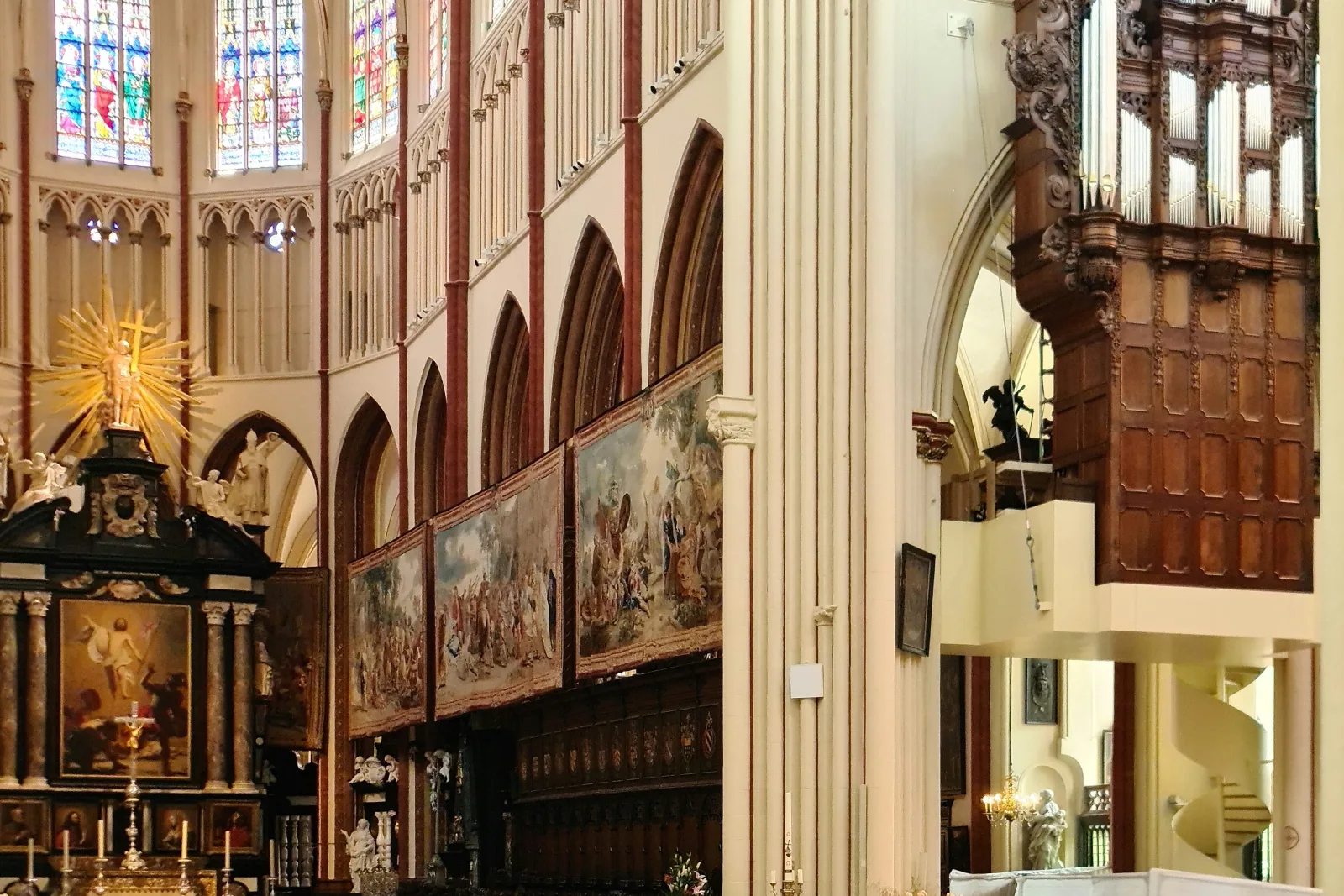
Sights
St Salvator's Cathedral and its tapestries
The free cathedral of Bruges: Brussels tapestries, the Golden Fleece arms and a treasury with Dirk Bouts.
Read the guide
Stay in a house built for Charles the Bold
Moerstraat 23, five minutes from the Markt. Book here for €10 less than on Booking.com.
Check Availability